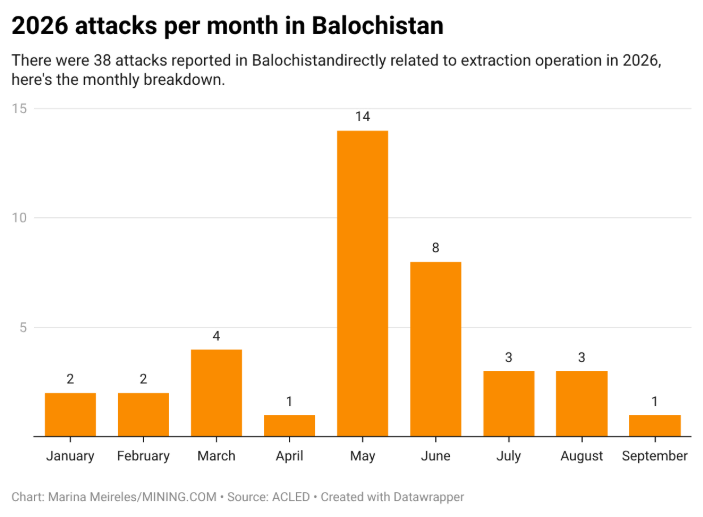
Attacks on mining operations in Pakistan’s Balochistan province totaled 38 between January and September 2026. This brings the total number of attacks over the past three years to more than 130, according to data from ACLED. Such incidents increase security risks as Pakistan seeks investment for its large, undeveloped copper-gold deposits.
Separatists are responsible for many of these attacks. They see mineral extraction as exploitation of the region’s wealth. Militants often target operations during transportation, bypassing security at mine sites. Nearly 90% of separatist attacks on mineral projects happen on roads.
These attacks primarily aim to disrupt operations and create instability, rather than cause fatalities. Gunmen typically fire at vehicle tires to disable trucks. They sometimes set vehicles ablaze after drivers leave. Militants also use roadblocks and checkpoints to highlight reduced state authority.
The rising instability makes it harder for Pakistan to develop its mineral resources. Foreign investors face higher risks. Security measures alone may not resolve the conflict, which has roots in political disputes over resources and regional autonomy. Attacks could escalate as Pakistan pursues its mineral development goals.
 22Jan
22Jan


 by
by