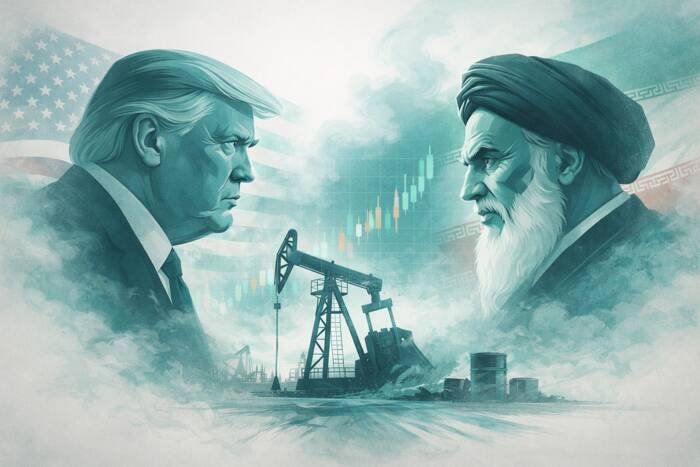
Geopolitical tensions in the Middle East are immediately impacting global markets. Strikes between the United States, Israel, and Iran raise fears of escalation, driving price action across commodities, currencies, and safe-haven assets. Traders will now watch for headlines on retaliation or de-escalation.
Oil markets are most sensitive to these developments. Iran is near the Strait of Hormuz, a route for 20% of the world’s oil. Brent crude oil trades near $73 and has risen strongly this year. A limited conflict could push oil to $80, while sustained disruption might send prices above $80 towards $100.
Currency markets show strong movements. The U.S. dollar may weaken first due to risk-off flows, but higher oil prices could later boost it. Safe-haven currencies like the Swiss franc and Japanese yen are seeing high demand. The Israeli shekel may remain volatile due to direct conflict exposure.
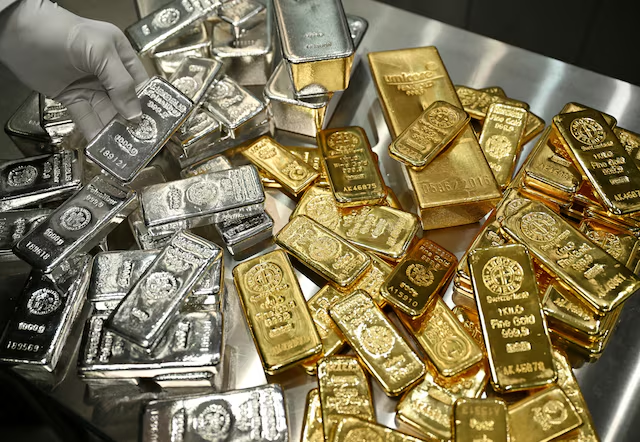
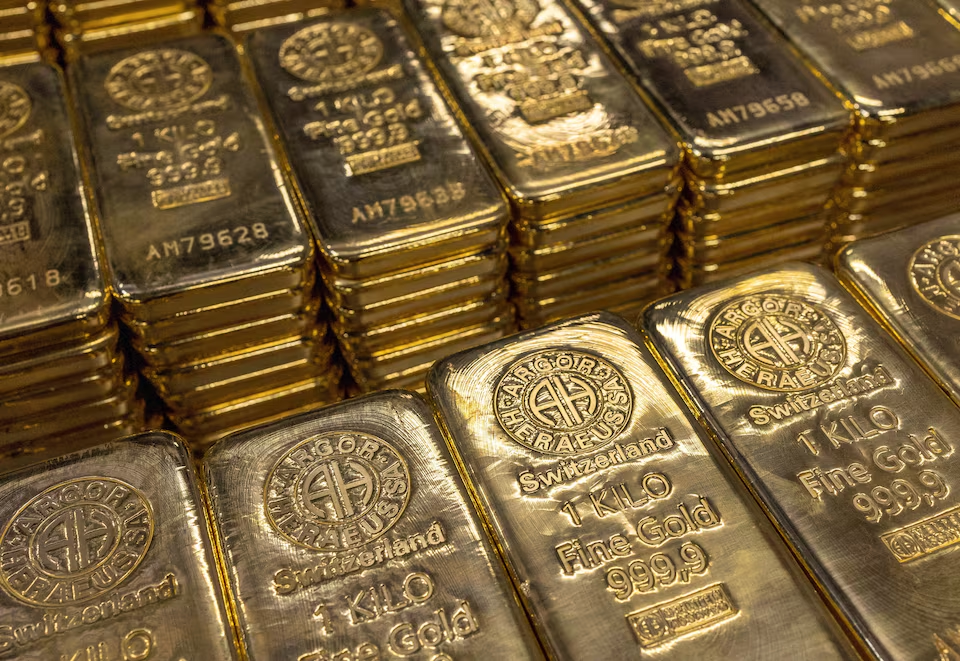
Precious metals are gaining from this geopolitical shock. Gold already trades in a strong uptrend, benefiting from increased risks. Investors transfer money to gold to safeguard portfolios during conflict. Silver tends to follow gold during such periods, strengthening bullish momentum for both metals.
Equity markets expect large swings as geopolitical risk premiums rise. The VIX volatility index has already risen this year and could soar if hostilities continue. The VIX spiked heavily during major global shocks, including March 2020 and a strong spike in March 2025. Bitcoin has not acted as a safe haven recently, falling significantly.
 22Jan
22Jan


 by
by