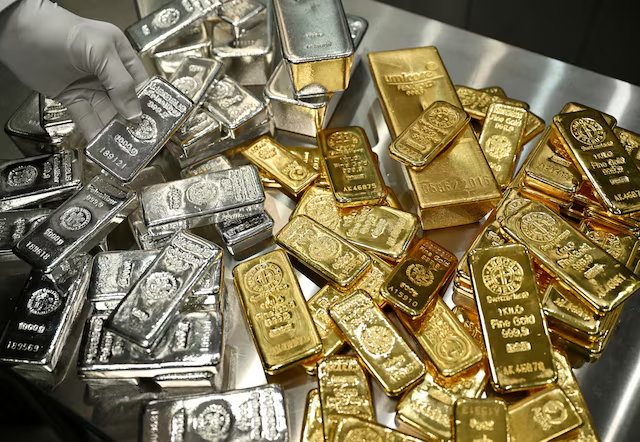
Modern Mining plans to commercialize its electronic waste processing technology, aiming to recover valuable metals like gold, silver, and palladium in the United States. The company seeks to reduce U.S. reliance on foreign supply chains for these critical materials. Discarded electronics hold high concentrations of these metals, often exceeding natural ore grades.
President Trump signed a measure in July to restrict industrial waste exports. This move aims to keep critical minerals in the country. Modern Mining is now raising capital to build its first commercial plant, following successful pilot and demonstration operations in Greenville, North Carolina.
Jeet Basi, Modern Mining CEO, calls e-waste an “above-ground mineral resource” and a new supply chain. The company’s process recovers gold, silver, palladium, and copper. It uses physical separation and “aqueous purification” to isolate individual metals for commodity markets, largely avoiding large-scale incineration.
Modern Mining plans a distributed network of modular plants, targeting one new facility per year over five years, starting in the U.S. Scaling critical-mineral recycling could reduce the need for new mine development by 25-40% by 2050, according to the International Energy Agency. Basi views urban mining as complementary to traditional mining, not a replacement.
 22Jan
22Jan


 by
by