

Gold Hits Record as Geopolitical Tensions Drive Safe-Haven Demand
Background
Global financial markets experienced a wave of volatility this week, culminating in gold prices reaching an unprecedented high. Investor apprehension, primarily fueled by US President Donald Trump’s proposed tariff increases linked to the Greenland dispute, prompted a significant flight to safe-haven assets.
Market Context
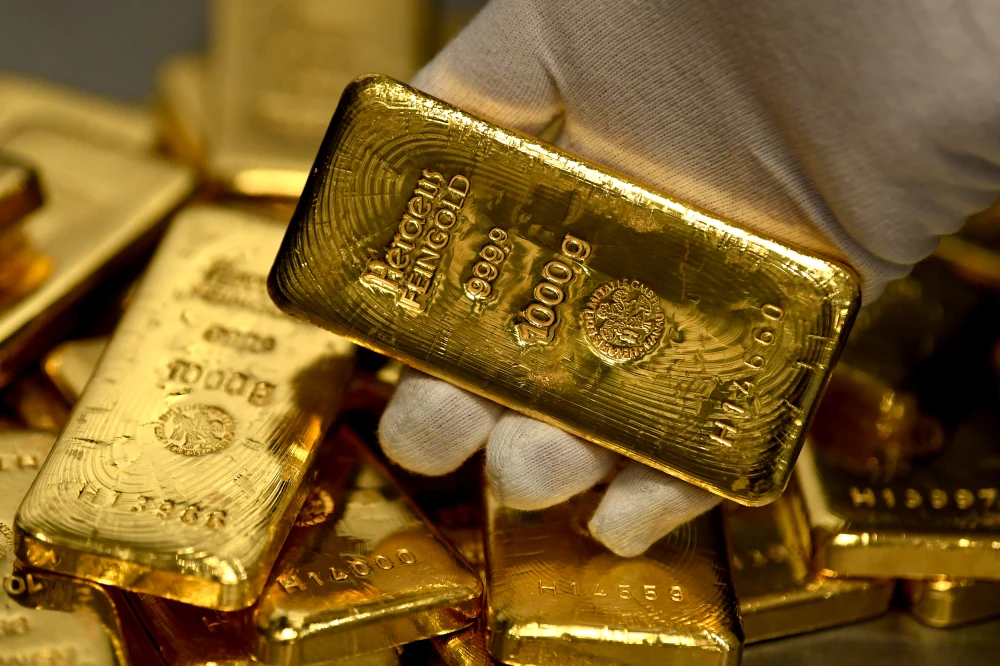
Gold surged past the $4,800 per ounce mark, registering a 1.7% gain as capital shifted towards perceived secure investments amidst the uncertainty. This movement underscores a broader sentiment of caution pervading international finance. Meanwhile, US futures showed modest recovery, with the S&P 500 futures up 0.3% and Dow Jones Industrial Average futures rising 0.2%, following earlier declines on Wall Street.
Local Relevance
Asian equities presented a mixed picture. Hong Kong’s Hang Seng index advanced 0.4%, and the Shanghai Composite edged up 0.1%. Conversely, Tokyo’s Nikkei 225 slipped 0.4%, reflecting both global geopolitical concerns and domestic issues, including a snap election called by Prime Minister Sanae Takaichi. Japanese long-term government bond yields also saw record levels, indicating market sensitivity to policy shifts.
Outlook
For Kuwait and GCC investors, the surge in gold prices holds particular significance. Gold has historically been a cornerstone of wealth preservation in the region, and its current trajectory reinforces its role as a hedge against economic and political instability. The ongoing trade disputes and geopolitical friction could also indirectly impact global oil demand and prices, a critical factor for the GCC’s oil-dependent economies. Regional investors are increasingly diversifying portfolios, with gold remaining a key component in volatile periods.
As global leaders convene at the World Economic Forum in Davos, attention remains fixed on policy announcements and their potential ramifications. The US administration's tariff threats against European nations, including Denmark, Germany, and the UK, signal escalating trade tensions. European leaders are reportedly considering retaliatory measures, suggesting a prolonged period of uncertainty. GCC finance professionals are closely monitoring these developments, understanding that global policy shifts can have direct implications for regional investment strategies and economic stability.

 by
by 


